Top Tax Deductions for Employees in Australia 2026
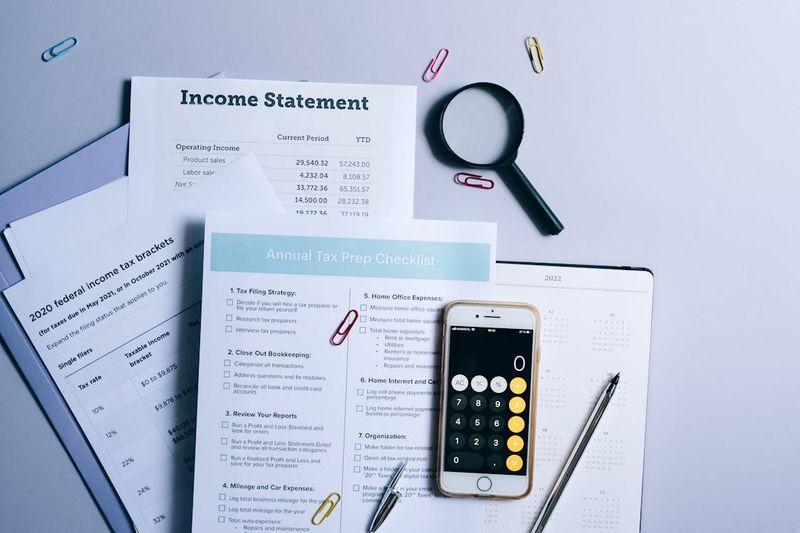
Australian employees can claim deductions for work-related expenses incurred in earning their income — but only the work-related portion, and only with records to support the claim. The five most valuable deduction categories are: home office, vehicle, self-education, tools and equipment, and union fees or professional memberships.
What are tax deductions for employees?
A tax deduction reduces your taxable income. If you earn $80,000 and claim $3,000 in deductions, you pay tax on $77,000. At the 32.5% marginal rate, that is a $975 reduction in your tax bill — or a larger refund when you lodge your return.
To claim a deduction, three conditions must be met: the expense must be directly related to earning your income, it must not be of a private or domestic nature, and you must have a record to substantiate it (receipt, invoice, log, or written evidence). The ATO scrutinises work-related expense claims closely — the amount of deductions claimed is one of the factors that triggers an audit flag.
How do employee deductions work in Australia?
Deductions are claimed in your annual tax return. You do not need to submit receipts with your return, but you must hold them for five years in case the ATO requests evidence. The ATO has benchmark data for what "typical" deductions look like in each occupation — claims significantly above average are more likely to attract scrutiny.
Key rule: apportionment. If an expense has both private and work components, only the work portion is deductible. For example, if you use your mobile phone 50% for work, you can claim 50% of the cost.
Step-by-step: claiming the main employee deductions
-
Home office — fixed rate method (67c/hour):
- Keep a record of the hours you work from home (a four-week representative diary is accepted by the ATO as a sample).
- Multiply total hours × $0.67.
- This covers electricity, internet, stationery, and minor consumables. You cannot also claim these items separately.
- You do not need a dedicated home office — a kitchen table counts.
-
Vehicle — cents per kilometre method:
- Claim up to 5,000 km per year at 88 cents/km (2025–26 rate) for work-related travel.
- Work-related travel means travel to a different work location, between worksites, or to a client — NOT your home-to-work commute.
- No logbook required, but you need to be able to explain how you calculated your kilometres.
-
Vehicle — logbook method:
- Maintain a logbook for 12 continuous weeks recording all trips, purpose, odometer readings.
- Calculate the work-use percentage from the logbook.
- Apply that percentage to all actual vehicle costs (fuel, insurance, registration, depreciation).
- The logbook is valid for five years if your work use pattern does not change significantly.
-
Self-education:
- Deductible if the study maintains or improves skills for your current job — not if it qualifies you for a new career.
- Eligible expenses: tuition fees, textbooks, stationery, course-related travel, internet for study.
- If the course is HECS/HELP funded, only the student contribution and other out-of-pocket costs are deductible, not the full tuition.
-
Tools and equipment:
- Items costing $300 or less: claim in full immediately.
- Items over $300: depreciated over their effective life (e.g., a laptop used 80% for work is depreciated over 3 years with the work-use percentage applied).
- Must be for work purposes — not a general-purpose computer you also use for gaming.
Common mistakes to avoid
- Claiming the home-to-work commute as a vehicle deduction. It is not deductible. The only commuting exception is if you are required to transport heavy tools to work that cannot be left at the workplace.
- Claiming the full cost of items with mixed private and work use. Always apportion. The ATO's data matching can identify unusually high claims relative to occupational benchmarks.
- Not keeping records. The ATO can deny claims made without substantiation. Keep receipts, bank statements, and logs for five years from the date you lodge the return.
- Claiming self-education that qualifies you for a new role. A teacher studying for a master's degree in education is deductible. A teacher studying for a law degree is not — it leads to a new career.
Frequently asked questions
Can I claim my home internet as a deduction? If you use the 67c/hour fixed rate method for home office, the internet component is already included — you cannot also separately claim internet costs. If you use the actual cost method, you can claim the work-related portion of your internet bill with an apportionment calculation.
What is the maximum I can claim without receipts? The ATO previously had a $300 limit for claiming work-related expenses without receipts. This no longer applies in the same way — technically, all claims should be substantiated. However, for claims under $300 in total, the ATO may not pursue supporting documentation. The safest approach is to keep records for everything.
Can I claim sunscreen and clothing? Sunscreen is deductible for outdoor workers (e.g., labourers, outdoor educators) who are exposed to sun as part of their job. Conventional clothing is not deductible even if you only wear it for work — it must be a compulsory uniform with the employer's logo, or protective clothing (hi-vis, hard hat) required for safety. Generic suits, business attire, and plain black clothing are not deductible.
Related calculator
Calculate your income tax and see how deductions reduce your overall tax liability → Income Tax Calculator